The short answer
What is B2B lead generation?
B2B lead generation is the process of identifying and attracting businesses that may be interested in your products or services. It involves activities such as SEO, paid advertising, content marketing, LinkedIn outreach, and email campaigns.
Finding new clients is an ongoing priority for businesses, particularly in the B2B space, where purchasing decisions often involve multiple stakeholders, detailed evaluations, and longer sales cycles.
Why B2B Lead Generation Matters for Business Growth
Unlike direct consumer purchases, B2B transactions typically require businesses to understand a potential client’s requirements, demonstrate their expertise, establish trust, and communicate the value of their solutions before a decision is made.
This makes attracting the right prospects just as important as generating a high volume of enquiries.
A well-planned approach to B2B Lead Generation Strategies helps businesses identify potential customers, connect with relevant decision-makers, and create opportunities that can develop into long-term client relationships.
Here are 10 practical approaches to help attract more relevant prospects and build a consistent pipeline of potential clients.
Understand Your Ideal B2B Customer Profile
Before investing in marketing activities, you need to understand who you want to reach.
A clearly defined ideal customer profile (ICP) helps businesses focus their efforts on organizations that are more likely to need their products or services.
Start by identifying factors such as:
- IndustryWhich industries are most relevant to your offerings?
- Business sizeAre you targeting startups, small businesses, or large enterprises?
- LocationWhich geographical markets do you want to serve?
- Decision-makersAre you targeting business owners, department heads, procurement managers, or marketing directors?
- Business challengesWhat problems are these organizations trying to solve?
- Budget and requirementsDo your services match their expected investment and operational needs?
Understanding these details helps you create more relevant messaging, choose suitable marketing channels, and avoid spending resources on audiences that are unlikely to convert.
Build a Strong Digital Marketing Strategy
B2B buyers often interact with a business several times before making a purchasing decision. They may discover a company through search engines, explore its website, review its LinkedIn presence, and compare its services with other providers.
Your marketing activities should work together rather than operate as disconnected campaigns.
A strong Digital Marketing Strategy and B2B Lead Generation Services begin with clear objectives. Decide whether your immediate priority is increasing brand awareness, generating enquiries, booking consultations, or attracting opportunities within a specific industry.
Optimize Your Website for Lead Generation
A professional-looking website is important, but it also needs to communicate your services clearly and make enquiries easy.
Start by reviewing your main website pages.
- Create clear service pagesExplain what you offer, who the service is for, and how it addresses specific business challenges.
- Use visible calls to actionAdd relevant prompts such as “Request a Quote,” “Book a Consultation,” or “Talk to Our Team.”
- Simplify enquiry formsRequest essential information without making the process unnecessarily lengthy.
- Showcase credibilityInclude genuine testimonials, case studies, client feedback, and relevant industry experience.
- Improve mobile usabilityEnsure visitors can navigate pages, read content, and submit enquiries comfortably across devices.
Effective landing page optimization is also important. If someone clicks an advertisement promoting a specific service, the destination page should directly address that offer instead of making visitors search through the website.
Use SEO to Attract High-Intent B2B Buyers
Search engine optimization helps businesses become more visible when potential clients search for relevant products, services, and solutions.
Start with keyword research to understand what your audience is searching for. Focus on relevant service-related searches, industry-specific terms, and questions connected to the problems your business solves.
Some practical SEO activities include:
- Optimizing service pages for relevant search terms.
- Publishing informative blogs and industry guides.
- Improving website structure and internal linking.
- Writing descriptive page titles and meta descriptions.
- Addressing technical SEO issues.
- Improving website speed and mobile usability.
Leverage LinkedIn Marketing to Connect with Decision-Makers
LinkedIn is an important platform for professional networking and using B2B Lead Generation Techniques because it allows businesses to build relationships with professionals, industry leaders, and potential decision-makers.
A more consistent approach should combine useful content, professional engagement, and targeted outreach.
Consider these activities:
- Optimize your company pageClearly communicate your services, expertise, target audience, and business value.
- Share industry insightsPublish useful observations, practical tips, company updates, and relevant industry information.
- Showcase your workShare case studies, project highlights, customer experiences, and examples of your expertise.
- Engage with relevant professionalsParticipate in industry discussions and interact with businesses and decision-makers in your target market.
- Use personalized outreachWhen connecting with potential clients, make your communication relevant to their business rather than sending generic sales messages.
Run Targeted Google Ads Campaigns
Google Ads allows businesses to display advertisements for relevant search queries, making it useful for capturing existing demand.
To make campaigns more effective:
- Research relevant commercial keywords.
- Separate campaigns based on services and search intent.
- Write advertisements that communicate clear benefits.
- Use relevant landing pages for each campaign.
- Set up conversion tracking.
- Review search terms and exclude irrelevant traffic.
- Monitor enquiry quality alongside campaign costs.
A well-targeted campaign can help attract interested prospects, but the website experience and follow-up process still determine how many of those prospects become customers.
Create Valuable Content That Builds Trust
Content marketing helps businesses provide that information while building credibility over time.
Some useful content formats include:
- Educational blog postsAnswer common industry questions and explain relevant business challenges.
- Case studiesDemonstrate how your business approached a particular project and the results achieved, using accurate and approved information.
- Industry guidesProvide practical information that helps potential customers understand their options.
- WebinarsShare expertise through discussions, demonstrations, and interactive sessions.
- InfographicsPresent complex information in a more accessible visual format.
- Customer testimonialsShare genuine experiences that help potential clients understand what working with your business involves.
Useful information gives prospects a reason to return to your website and consider your business when they are ready to make a decision.
Use Email Marketing to Nurture Potential Clients
Start by organizing your contacts based on relevant factors such as industry, interests, previous interactions, or stage in the buying process.
You can then create targeted email sequences that provide useful information.
For example:
- Send a welcome email after someone subscribes or downloads a resource.
- Share relevant industry insights and educational content.
- Introduce services that match the prospect’s interests.
- Highlight genuine case studies or customer experiences.
- Invite interested prospects to schedule a consultation.
The objective is to remain useful and recognizable so that when a prospect is ready to move forward, your business is already familiar to them.
Implement Marketing Automation for Better Lead Management
Marketing automation helps businesses manage repetitive marketing tasks, organize contacts, and maintain consistent communication.
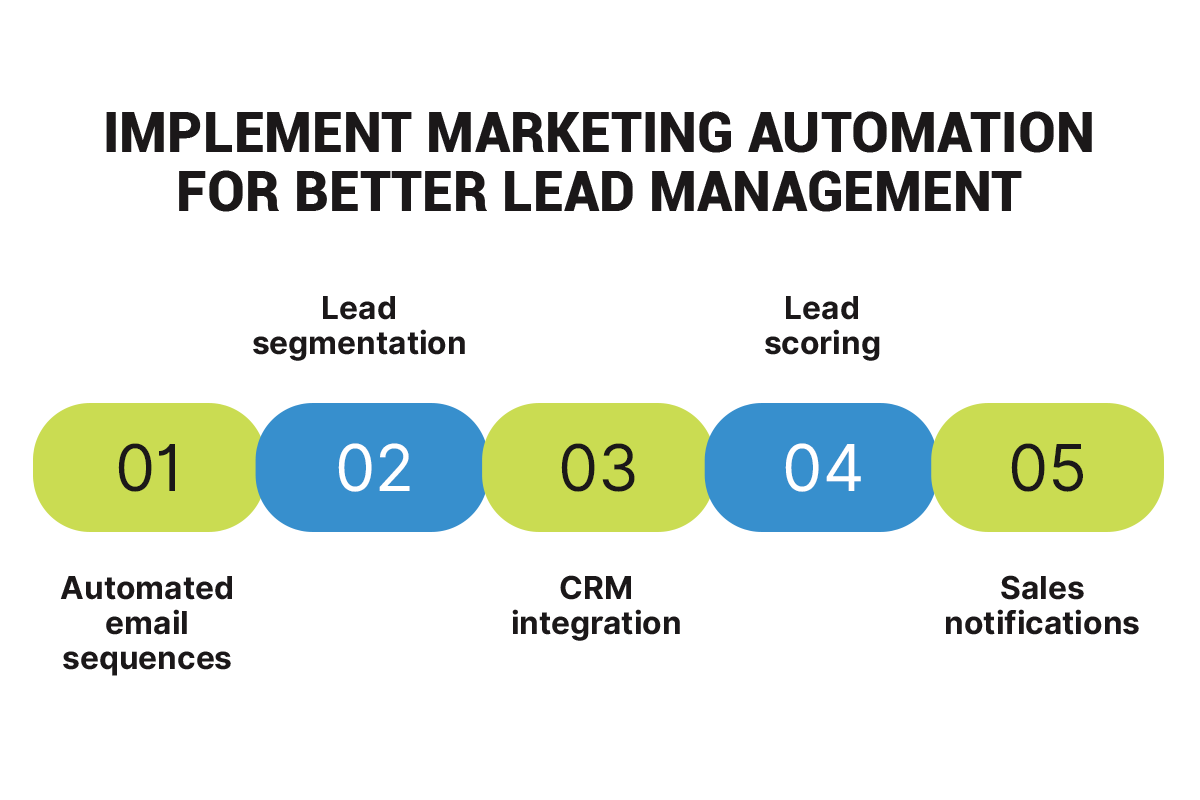
Depending on the tools being used, automation can support:
- Automated email sequencesSend relevant follow-ups based on a prospect’s actions or subscription.
- Lead segmentationOrganize contacts according to their industry, interests, or engagement.
- CRM integrationKeep enquiry details and communication history organized in one place.
- Lead scoringAssign scores based on selected characteristics and interactions to help prioritize follow-ups.
- Sales notificationsAlert relevant team members when a prospect takes an important action.
Personalized follow-ups, timely responses, and human interaction remain important, particularly when B2B purchases involve detailed discussions and customized requirements.
Track Lead Generation Performance and Optimize Campaigns
Launching campaigns is only one part of the process. Businesses also need to understand whether their marketing activities are attracting relevant prospects and contributing to actual sales.
Regular performance reviews help identify which channels are working, where potential customers are dropping off, and what needs improvement.
Some important metrics to monitor include:
| Metric | What It Measures |
|---|---|
| Website conversion rate | Percentage of visitors who complete a desired action |
| Cost per lead (CPL) | Average marketing cost of generating a lead |
| Cost per qualified lead | Cost of acquiring a lead that meets your qualification criteria |
| Lead-to-customer rate | Percentage of leads that become paying customers |
| Customer acquisition cost (CAC) | Total relevant sales and marketing cost of acquiring a customer |
| Return on investment (ROI) | Financial return relative to the investment |
Review your results regularly, test different messaging and offers, improve underperforming pages, and adjust budgets based on meaningful outcomes.
Consistent measurement makes it easier to refine your approach and build a more predictable pipeline over time.
Turn More Prospects into Long-Term Clients
The most effective B2B Lead Generation Strategies are built around understanding your ideal customers and creating relevant opportunities for them to engage with your business.
At DigiClicks, we help businesses build connected digital experiences through SEO, website development, creative design, social media management, performance marketing, Digital Marketing Lead Generation and AI solutions. Our approach focuses on aligning marketing activities with business objectives to help companies strengthen their online presence and attract relevant opportunities.
Whether you are looking to improve your website, reach decision-makers through LinkedIn, or build more targeted advertising campaigns, the right combination of digital channels can support sustainable business growth.
Questions people ask
What is B2B lead generation?
B2B lead generation is the process of identifying and attracting businesses that may be interested in your products or services. It involves activities such as SEO, paid advertising, content marketing, LinkedIn outreach, and email campaigns.
What are the most effective ways to generate B2B leads?
Some commonly used methods include search engine optimization, LinkedIn marketing, Google Ads, content marketing, email marketing, and referral programs. The right combination depends on your industry, target audience, and business objectives.
How is B2B lead generation different from B2C lead generation?
B2B lead generation focuses on attracting businesses and professional decision-makers, while B2C lead generation targets individual consumers. B2B purchasing decisions often involve longer sales cycles, multiple stakeholders, and more detailed evaluations.
How can I improve the quality of B2B leads?
Define your ideal customer profile, target relevant industries and decision-makers, create specific service pages, use appropriate qualification questions, and review which leads eventually become customers.
Is LinkedIn effective for B2B lead generation?
Yes. LinkedIn can help businesses connect with professionals, share industry knowledge, establish credibility, and reach relevant decision-makers through content and personalized outreach.
How long does it take to generate B2B leads through digital marketing?
The timeline depends on the channels used, competition, budget, and sales cycle. Paid campaigns may generate enquiries relatively quickly, while SEO and content marketing generally require consistent effort before producing meaningful organic results.
Should B2B businesses hire a lead generation agency?
Businesses may benefit from external support when they need specialist expertise, campaign management, audience research, marketing automation, or better lead tracking. Before choosing a provider, review its approach, services, reporting process, and understanding of your business goals.
How do I measure the success of a B2B lead generation campaign?
Track qualified leads, cost per lead, conversion rates, customer acquisition costs, and revenue generated. These measurements provide a better understanding of campaign effectiveness than clicks or enquiry volume alone.